
Blogs
Smart Washrooms in Airports
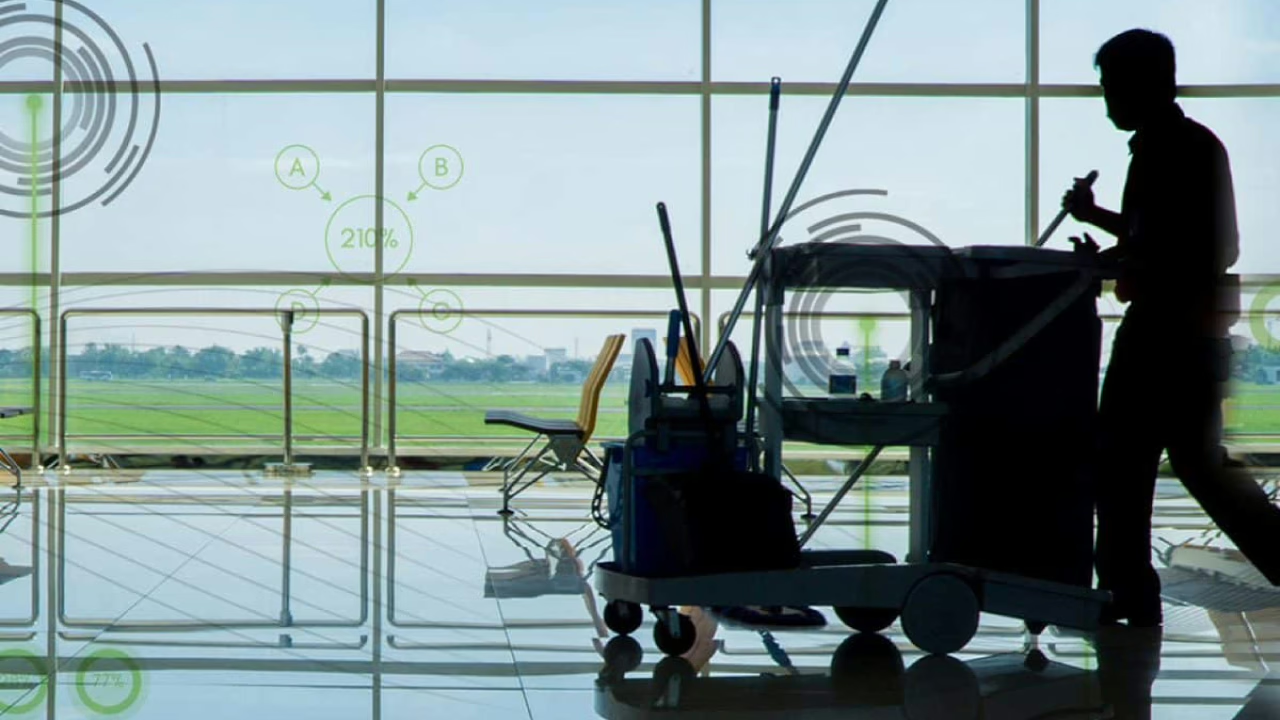
Revolutionising the Airport Experience: The Rise of Smart Washrooms
Modern airports are busy spaces. With millions of passengers transiting daily, efficiency and cleanliness are more than conveniences – they are necessities. Within these bustling terminals, airports are embracing Smart washroom technology to redefine passenger experiences. The cutting-edge solutions are improving hygiene, enhancing operational efficiencies and transforming how airports manage one of their most essential facilities.
The Smart washroom revolution
Smart washrooms integrate advanced, customised technologies such as IoT environmental and operational sensors, data analytics, and automated systems to monitor and manage facilities in real-time. These digital washrooms seamlessly improve hygiene and operational efficiencies, whilst boosting user experience.
As hubs of international travel, airports experience extremely high footfall. With a diverse user demographic and wide range of consumer needs, facilities management teams often struggle to meet the demands of such busy spaces. However, such demanding facilities are uniquely positioned to benefit from the Smart technology transformation.
In this article, we look as how innovative, data-driven solutions allow airport FM teams to enhance hygiene, optimise resource efficiency, and elevate passenger satisfaction.
Enhancing airport hygiene standards with data-driven cleaning
Traditional cleaning approaches in airport washrooms often operate on fixed schedules and intervals, which rarely align with actual usage patterns. Smart washrooms disrupt this model and allow airports to work smarter, save money and boost passenger experience.
Intelligent cleaning management software interacts with integrated IoT sensors and occupancy trackers to leverage real-time data across a wide range of variables. The systems notifies cleaning staff about high-traffic periods or specific areas requiring immediate attention, meaning FM teams can respond to actual occupancy requirements and real-time demands in washrooms throughout the entire airport.
Key benefits include:
- Targeted cleaning: Resources are always directed exactly where they are needed the most, reducing waste and optimising resources.
- Improved hygiene: Any issues are addressed promptly, guaranteeing the most hygienic of spaces, no matter the footfall.
- Passenger satisfaction: The solution ensures visibly cleaner and well-maintained washroom environments.
Optimised water usage with Smart water management
Water conservation is a critical concern for airports aiming to reduce their environmental impact. Smart water management systems, which use a combination of IoT technology, real-time sensors and valves, and advanced data processing, allow airports to monitor and control water usage, enabling efficient utilization of this precious resource.
Innovative features such as sensor-activated fixtures ensure taps and flush systems activate only when needed, preventing unnecessary water wastage, while leak detection alerts ensure maintenance teams can address any plumbing issues before they escalate. And with detailed usage analytics, businesses have critical insights that allow them to optimise water consumption patterns and achieve their sustainability goals.
Key benefits include:
- Sustainable action: Allows airports to prioritise water conservation across numerous washrooms, terminals and locations.
- Emergency action: If leaks or blockages are detected, water can be automatically shut off to prevent further, costly damage.
- Dynamic usage information: Management can watch usage in real-time, allowing immediate action to be taken.
Occupancy systems for improved customer experience
Sensor driven occupancy systems are a simple yet effective way in which airports can enhance washroom services and boost customer experience. Cubicle occupancy sensors are one example of technology which, in high footfall areas such as airport, can ease congestion by directing customers to vacant cubicles, helping to manage people flow. Up-to-date data can be displayed on external, customer-facing screens allowing passengers to decide to wait or be directed to the closest alternate washroom should all cubicles be occupied.
By avoiding overcrowding and over-used facilities, the systems ensure a more pleasant washroom experience for travellers. In addition, the systems collect valuable, real-time occupancy data using Smart technology, which is easily viewed and analysed by FM teams, supporting improved operational efficiencies.
In addition to occupancy information, Smart washrooms can also feature digital feedback panels, allowing passengers to rate cleanliness, functionality, and overall satisfaction. This real-time data provides airport management with actionable insights to improve services continuously.
Key benefits include:
- Passenger-centric: The systems demonstrate a commitment to customer needs and responsiveness to feedback.
- Real-time action: Improvements and updates are driven by user needs.
- Trend analysis: Identifies recurring issues, allowing for proactive solutions.
Airports need Smart washrooms
Airports are evolving into Smart ecosystems, and washrooms are fast becoming a focal point of innovation. It’s clear to see that the integration of Smart washroom technology aligns with their overarching goals of enhancing passenger satisfaction, elevating hygiene standards and improving operational efficiencies.
As global air travel continues to grow and passenger expectations rise further, an investment in Smart washroom technology is not just beneficial but essential. By embracing smart washroom technology, airports are not only meeting the needs of today’s travellers but also setting the stage for a smarter, cleaner, and more sustainable future.
Latest Posts
Elevating Hospital Hygiene and Safety Standards with Data-Driven Cleaning
Within hospitals, patient safety and infection control are non-negotiable.
World Earth Day: Advancing Water Sustainability with Smart Washroom Sensors
April 22 marks Earth Day, a global event dedicated to environmental protection and sustainability.
Why the Smart Washroom market is set for explosive growth in 2025
Smart washroom technologies have revolutionized the public restroom experience.
Greenwashing in the Washroom – are Eco-Friendly Products all They Appear?
With sustainability a key focus across all sectors, many brands are now engaging in ‘greenwashing’ – the practice of misleading consumers by exaggerating environmental benefits.
The Future of Washrooms: How Smart Solutions Are Redefining Hygiene, Sustainability, and User Experience
The traditional washroom has undergone a significant transformation in recent years. Often viewed as a basic space with limited functions,