
Blogs
Why the Smart Washroom market is set for explosive growth in 2025
Key Trends Driving Growth in the Smart Washrooms Market
Increased Smart integration
Heightened hygiene concerns
The global pandemic heightened awareness of hygiene and sanitation in public spaces. Touchless washroom solutions became more desirable than ever, and automated dispensers and sensor-activated systems have become standard expectations.
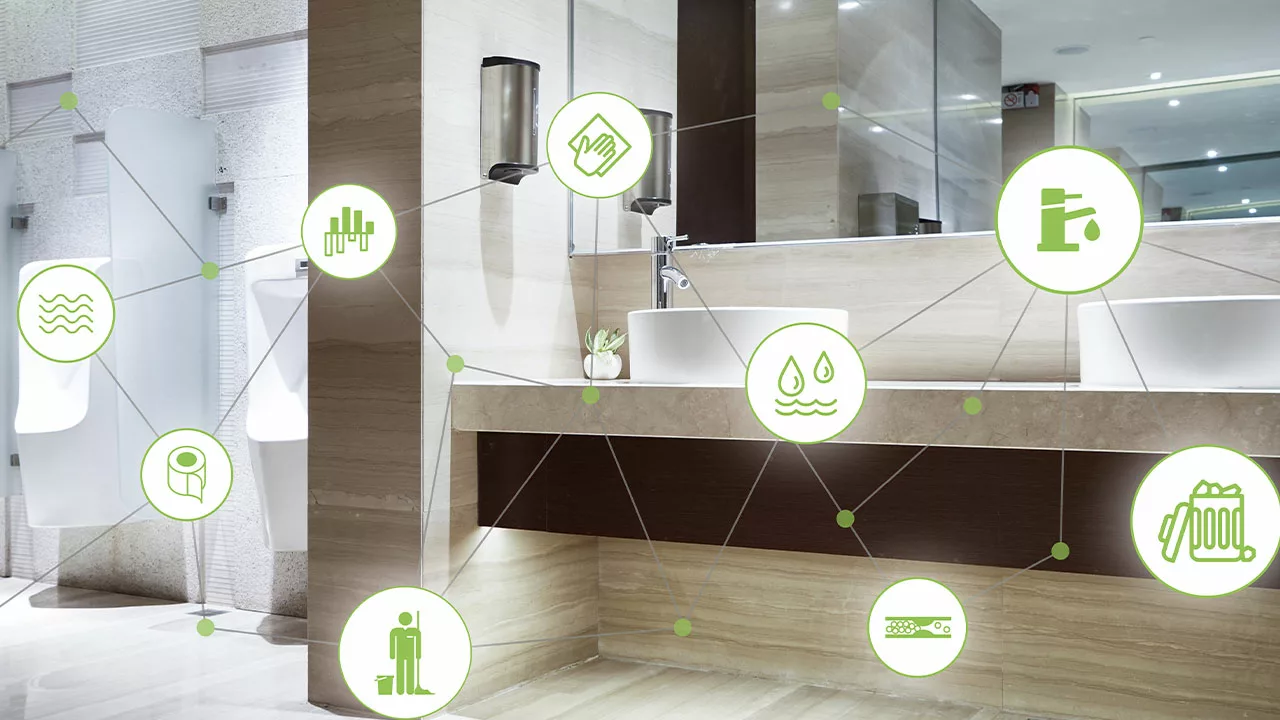
Smart washrooms integrate IoT environmental and operational sensors to significantly reduce contact with surfaces and enhance sanitation. Features like touchless operation, automated cleaning systems and real-time occupancy monitoring help prevent the spread of germs, support social distancing, and ensure that hygiene standards are consistently maintained.
Renewed sustainability focus
The Middle East remains at the forefront of sustainable urban development, driven by ambitious initiatives and transformative investments in Smart, eco-friendly spaces. This puts business owners and FM under increasing pressure to meet ever stringent environmental goals.
Smart washroom technologies, which include water-efficient solutions, Smart metering devices and leak detection systems, help minimize water waste while maximizing efficiency. As regulators continue to push for greener building standards, Smart washroom technology will become a fundamental component of sustainable FM and drive adoption of these environmentally conscious solutions.
Preference for personalised experiences
Nowadays, we expect a personalized experience in all aspects of our interaction with technology. As a result, businesses are looking to invest in customized solutions across all areas, to enhance user satisfaction, and the washroom is no exception.
Smart washrooms can be tailored to individual preferences, adjusting lighting, water temperature and air quality based on user preferences or usage patterns.
As consumers, we also like to know that a company is committed to our needs. Smart washrooms can feature digital feedback panels, allowing cleanliness, functionality and overall satisfaction to be rated. This real-time data provides businesses with actionable insights allowing them to improve services continuously and demonstrate a customer-centric attitude.
Advanced sensor technology
Sensor technology continues to evolve and improve, making Smart washrooms more accurate, efficient and cost-effective than ever before. Modern sensors are now capable of detecting restroom occupancy, tracking usage patterns and even identifying potential maintenance issues before they escalate.
As sensor technology continues to improve, the smart bathroom market in 2025 will become even more responsive and continue to drive market demand.
Convenience and Smarter ways of working
Convenience is a major factor fuelling the adoption of Smart washroom solutions. For the user, touch free dispensers and automated flushes make life much easier. Occupancy sensors can instantly direct us to empty stalls or less crowded facilities, saving us time and preventing the inconvenience of busy spaces.
For FM teams, data driven cleaning provides a wealth of information on a range of variables, such as accurate visitor numbers, consumable levels and real time cleaning needs. With a Smart cleaning approach, cleaning becomes proactive rather than reactive, allowing FM teams to improve their performance and to work Smarter.
Monetary savings
Building operators and FM constantly face the challenge of maintaining efficiency and performance while navigating ever-tightening budgets. By adopting Smart washroom solutions, they stand to benefit significantly from cost-saving advantages such as predictive maintenance, automated inventory tracking and optimized resource usage, which translate into reduced operational expenses.
Smart washroom systems can alert maintenance teams to refill dispensers or address issues before they become costly problems, ensuring that resources are used efficiently, and downtime is minimised. The return on investment for the solutions makes them a financially sound choice for organizations looking to cut costs in 2025, while improving restroom management and user satisfaction.
Looking ahead
The Smart washroom market is set for remarkable growth in 2025. Businesses that invest in the cutting-edge solutions will not only meet evolving user expectations but also optimize efficiency, reduce costs, and contribute to a cleaner, greener future.
Latest Posts
Elevating Hospital Hygiene and Safety Standards with Data-Driven Cleaning
Within hospitals, patient safety and infection control are non-negotiable.
World Earth Day: Advancing Water Sustainability with Smart Washroom Sensors
April 22 marks Earth Day, a global event dedicated to environmental protection and sustainability.
Smart Washrooms in Airports
Modern airports are busy spaces. With millions of passengers transiting daily, efficiency and cleanliness are more than conveniences – they are necessities.
Greenwashing in the Washroom – are Eco-Friendly Products all They Appear?
With sustainability a key focus across all sectors, many brands are now engaging in ‘greenwashing’ – the practice of misleading consumers by exaggerating environmental benefits.
The Future of Washrooms: How Smart Solutions Are Redefining Hygiene, Sustainability, and User Experience
The traditional washroom has undergone a significant transformation in recent years. Often viewed as a basic space with limited functions,