
Blogs
Washroom Occupancy Sensors – Why Your Building Needs Them

Washroom Occupancy Sensors – Why Your Building Needs Them
By detecting the motion of people in any given space, occupancy sensors allow smart systems to do a number of things automatically. From adjusting the AC to turning off lights when you leave the room, the sensors utilize built-in technologies to trigger automatic responses, offering operational efficiencies and reduce waste.
In larger commercial spaces, where footfall is high, the use of washroom occupancy sensors provides facilities management teams with benefits that go far beyond reducing waste.
We take an in-depth look at what washroom occupancy sensors are, how they work, and crucially, the benefits they offer for overall better management of bathroom facilities.
What is a washroom occupancy sensor?
As the name suggests, washroom occupancy sensors are simple, cost-effective tools that monitor the movement of people and accurately measure user numbers in real-time. They allow businesses to make the most effective and efficient operational decisions, that will ultimately provide the most comfortable environment for the user.
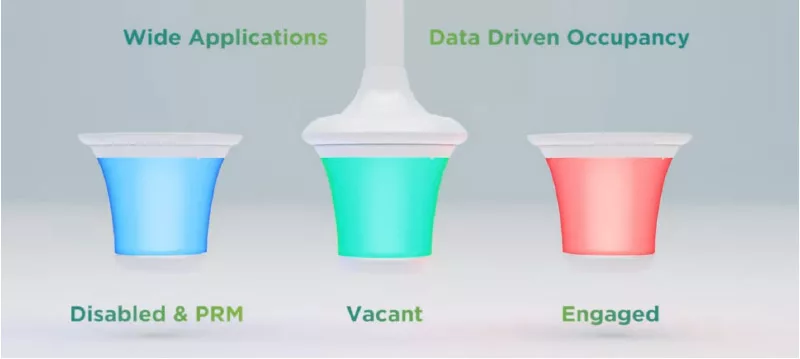
Let’s take VERTECO’s LooLights™ as an example. The sensor system works in a similar way to how a car park shows users space availability. A sensor detects when a washroom cubicle is in use, and when attached to the ceiling outside of each washroom cubicle door, helps to manage people flow by directing customers to empty spaces and away from occupied stalls. The system, which can be easily retrofit into any space, uses a simple green for vacant cubicles, red for engaged and blue for disabled.
Data that the occupancy systems collect can then be displayed at the washroom entrance, directing customers to less busy facilities if needed, instantly easing congestion. For facilities management teams, the data on cubicle occupancy can be viewed and analysed on a desktop or mobile device, helping them to make real-time decisions that immediately impact and improve operational efficiencies.
Smart Washrooms, a Smarter Approach to Maintenance Costs
- Maintaining social distance
One of the most obvious benefits of washroom occupancy sensors is addressing social distancing. Notoriously small spaces, to adhere to recommended guidelines, washroom occupancy often needs to be limited. But there is no way of knowing if occupancy levels have been reached until you are actually inside the washroom.When an occupancy sensor is installed and connected to a display panel at the entrance of the facility, customers can be alerted and avoid entering an over-crowded space, keeping everyone happy and healthy. - Improved Cleanliness
Real-time data is immediately analyzed by facilities teams, alerting them to busy periods and allowing them to make immediate operational changes. The frequency of cleaning schedules can quickly be increased and the highest levels of hygiene maintained. - Improving staff efficiencies
Because facilities teams have an up-to-date view of the washrooms they are managing, resources can be diverted to where they are really needed, supporting more effective facilities management. - Cost savings
By having a better understanding of where people are, things such as lighting and AC can be set to the most cost-effective levels, supporting better management of resources and reducing waste. - Happier employees
Washroom occupancy sensors support a more hygienic, safe and well-managed environment for employees, something which has never been more important.
The benefits of washroom occupancy sensors are vast, but ultimately, they provide the best possible experience for customers, staff, and business owners, with the reassurance that their wellbeing is a top priority.
Read more in our blog about the benefits of occupancy management.
Latest Posts
Elevating Hospital Hygiene and Safety Standards with Data-Driven Cleaning
Within hospitals, patient safety and infection control are non-negotiable.
World Earth Day: Advancing Water Sustainability with Smart Washroom Sensors
April 22 marks Earth Day, a global event dedicated to environmental protection and sustainability.
Why the Smart Washroom market is set for explosive growth in 2025
Smart washroom technologies have revolutionized the public restroom experience.
Revolutionising the passenger experience: How smart washroom technology transforms airport operations
From real-time hygiene monitoring to water conservation, IoT-driven washroomsare transforming passenger experiences and operational efficiency
Smart Washrooms in Airports
Modern airports are busy spaces. With millions of passengers transiting daily, efficiency and cleanliness are more than conveniences – they are necessities.